



What Are the Three Pillars of Information Security for Enterprises

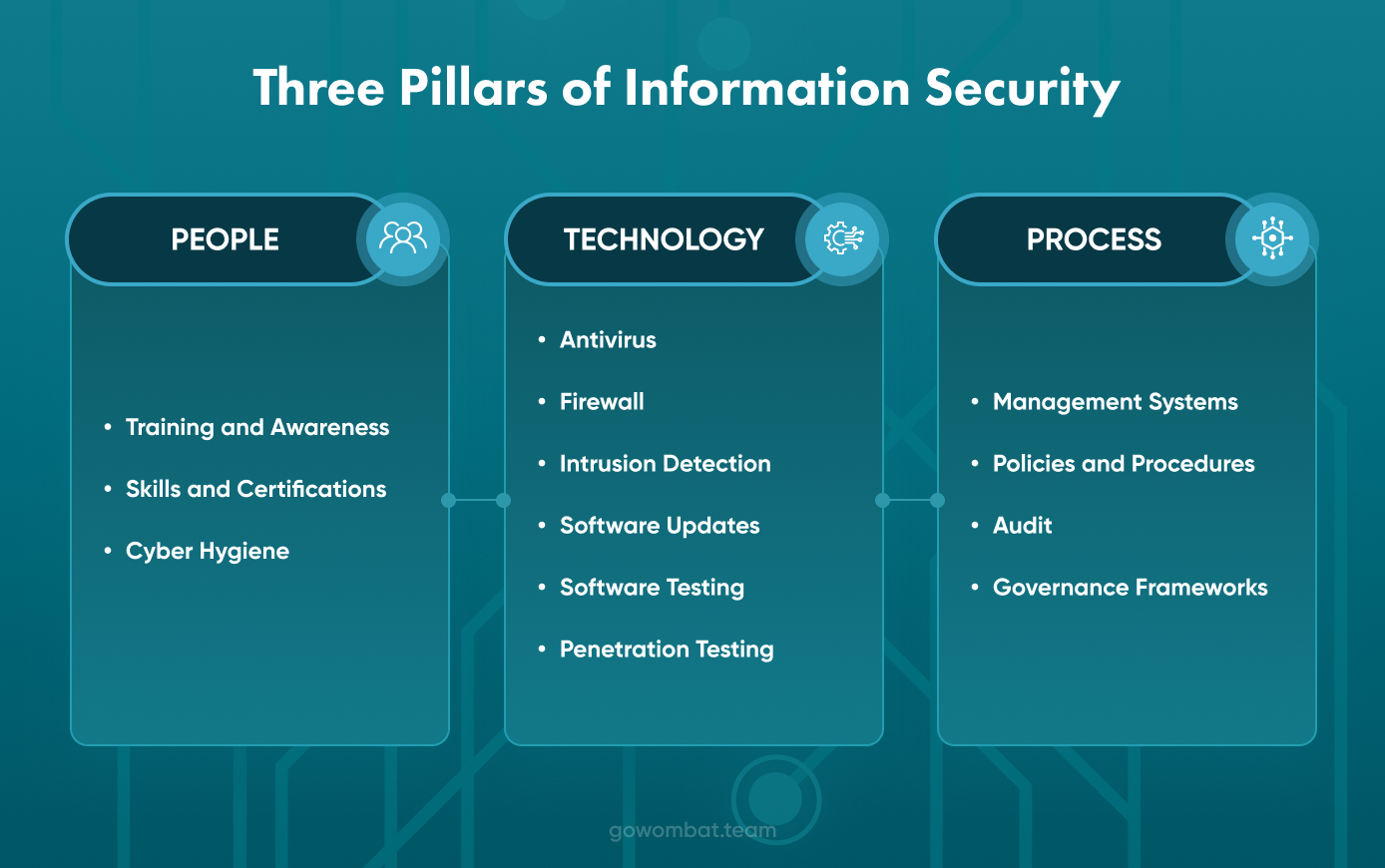
The three pillars of information security in enterprise environments are operational controls, technical controls, and personnel controls. Together, they form the execution layer of ISMS and PIMS frameworks and translate security principles into enforceable, auditable practice. This model is distinct from the CIA triad, which defines security objectives rather than the appropriate control mechanisms required to achieve and sustain them.
For large companies working in regulated or trust-sensitive sectors, this difference is very important. Regulators, external auditors, and enterprise customers judge information security not by the security principles or technical measures. They look at security controls that can be demonstrated, the accountability, and the repeatability of the processes. Overal it is about the ability to show that the controls can be repeated and are reliably effective, rather than on security principles in general or on isolated technical measures. Thus, an in-depth knowledge of the three pillars brings about a very tangible basis for developing, expanding, and continuously operating information security practices.
Why a Control-Based View of Information Security Matters for Enterprises
Enterprise information security management system is no longer about principle-driven declarations but more about control-driven execution. The shift from principles to security controls is a result of multiple factors coming together:
- increased regulatory requirements across data protection, privacy, and resilience;
- complex digital ecosystems spanning cloud platforms, third parties, and remote teams;
- rising expectations for audit evidence, incident management, and accountability.
Security policies are judged by their level of implementation rather than their intent in such a scenario. Companies are required to demonstrate:
- The manner in which risks are identified, assessed, and accepted.
- The way security controls are enforced at the system and team levels.
- The incident management processes that detect, manage, and review evolving threats.
- The methods of continuously improving security.
Taking a control-based perspective of an information security management system matches perfectly with these criteria. It is an organised approach that security strategies can use to turn into everyday business processes, thus assuring that security standards are consistent, measurable, and defensible.
How the Three Pillars of Information Security Differ from the CIA Triad
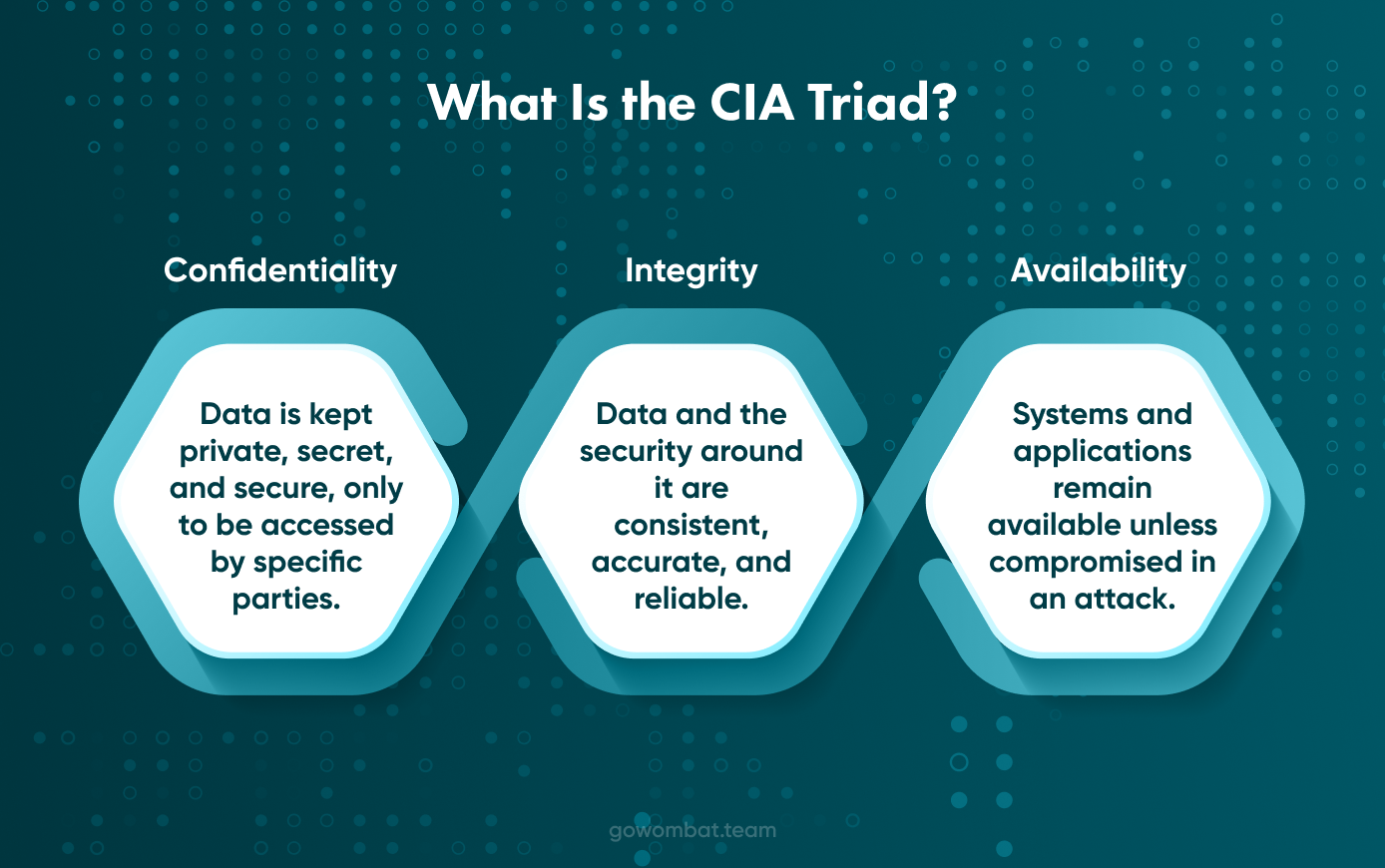
The CIA framework remains an important conceptual model, but it does not provide a sufficient framework for enterprise execution.
What the CIA Triad Represents in Modern Security Programmes
Confidentiality, integrity, and availability are three aspects that define the conditions of secure information systems. They help us determine what must be protected and the reasons behind it. The CIA model serves as a guide for most organisations in the following ways:
- ensure high-level security standards and objectives;
- prioritise protection of critical or sensitive information;
- frame discussions around the risk treatment plan and impact.
Nevertheless, these three principles do not indicate how security requirements are regulated or carried out.
Why Principles Alone Are Insufficient for Enterprise Risk Management
Principle-based management doesn't have operational clarity. Essentially, those principles don't:
- allocate ownership and accountability;
- establish processes for incident handling or access review;
- produce evidence for internal and external auditors, regulators, or customers;
- help in continuous improvement or maturity measurement.
Therefore, companies that base their approach entirely on principles can find themselves in trouble not only during audits but also when facing security incidents or certification processes.
How Control-Based Pillars Map to ISO 27001 and PIMS Requirements
ISO 27001, privacy management frameworks, and other similar frameworks examine how well the controls have been implemented, adhered to, and evaluated. They concentrate on:
- documented processes and responsibilities
- technical enforcement and monitoring
- personnel competence and awareness
- repeatability and improvement
What Are Operational Controls in Information Security
Operational controls delineate the ways in which information security is governed, executed, reviewed, and improved throughout the organisation. They make sure that security policies are consistent, traceable, and in line with business goals.
Operational Controls and Information Security Risk Management Processes
Operational controls are based on the information security risk management that provides a structured way for:
- identifying potential threats and vulnerabilities;
- assessing likelihood and impact;
- defining treatment measures;
- accepting or transferring residual risk.
The ISMS and PIMS context, however, considers this as a continuous process, not a static one. This means that security is always kept in line with new threats and changes in laws and regulations.
Policies, Procedures, and Governance as Security Enablers
The mechanisms that direct everyday behaviour, such as policies, procedures, and governance, are the means through which operational controls are implemented. Some of the typical examples consist of:
- information security policies;
- incident response procedures;
- change management processes;
- third-party and vendor governance;
- business continuity planning.
These are the controls that morph strategy into practice and make security such a natural part of the operations that you wouldn't even think of it as an exception.
Operational Controls in the ISO 27001 Certification
ISO 27001 auditors pay great attention to operational consistency and evidence. Among other things, they assess whether:
- the controls have been documented and approved;
- the procedures in practice;
- records of the reviews and improvements recorded;
- active management involvement in security performance oversight.
The certification body requirements are seldom met by isolated technical solutions without strong operational support.
What Are Technical Controls and How Do They Enable Secure Systems
Technical controls are enforceable mechanisms that protect sensitive data, computer systems, and services on a large scale. They offer automation, consistency, and visibility across complicated setups.
Technical Controls Within ISMS and PIMS Frameworks
A technical measure is considered a control when it:
- is aligned with security objectives that have been defined;
- is properly configured and documented;
- is continuously monitored;
- is regularly reviewed and improved.
ISMS and PIMS frameworks require this governance around technological measures very explicitly and with no exceptions.
Core Technical Controls in Enterprise Environments
Most enterprises base their environments on a fundamental set of technical controls, such as:
- identity and access management;
- encryption for data both at rest and in transit;
- logging and monitoring;
- vulnerability and configuration management;
- secure cloud and application architectures.
These controls establish the technical basis of enterprise security.
Technical Controls and Privacy Management Under GDPR
Technical controls are one of the mechanisms through which the compliance of the following can be achieved under GDPR:
- restricting access and minimising data;
- accountability through audit trails;
- breach detection and response;
- ensuring the protection of personal data processed.
Privacy management can neither be demonstrated nor defended if there are no efficient technical controls.
Strengths and Limitations of Technical Controls
Technical controls present the following considerable benefits:
- scalability over large environments;
- real-time detection and response;
- less dependence on manual intervention.
Nevertheless, when not well regulated, they also pose some risks such as misconfiguration, complexity, and false confidence.
Why Personnel Controls Are the Most Critical Pillar
Human behaviour is still the main cause of security incidents. Personnel controls are the most direct way to manage risks.
What Personnel Controls Mean in Practice
Personnel controls refer to how the company manages its staff throughout their working lifecycle:
- onboarding and role definition;
- access assignment and review;
- training sessions and awareness;
- performance management and accountability;
- offboarding and access removal.
The staff is made aware of their duties and given the appropriate working environment to carry them out with the help of such controls.
Human Resource Security in ISO and ISMS Models
Insider threats and human errors are the main reasons for security breaches resulting in phishing, social engineering, and other operational mistakes. Those threats are largely avoided by:
- perpetual security awareness;
- training tailored to the roles;
- defined routes to escalate issues;
- responsibility in the eyes of different teams.
Human resource security is addressed in ISO and ISMS models similarly to other control areas. The internal inspector during ongoing audits checks whether the company has methods of raising awareness, enforcing, and verifying the competence of staff, rather than mere informal or occasional training.
How the Three Pillars Work Together in an ISMS and PIMS Framework
An Information Security Management System, together with a Privacy Information Management System, can help you manage your security and privacy risks more effectively.
Where the ISMS is geared at the preservation of information assets, while the PIMS approach is more comprehensive, covering data protection and privacy requirements.
Both frameworks are built around the integration of operational, technical, and personnel controls.
Operational controls establish governance, risk management, and oversight structure. Technical controls are the security mechanisms put in place, and they also include logging and monitoring. Personnel controls ensure that employees behave as per the set expectations and are trained regularly.
When combined, they provide the business capabilities to:
- place information security policies into daily practice;
- demonstrate accountability to regulators and customers;
- respond effectively to incidents and audits;
- continuously improve security maturity.
Control Interdependence and Defence in Depth
None of the pillars can hold up the weight of the other if it deeply fails. Defence in depth is achieved when:
- Operational controls establish the ground rules and assign accountability.
- Technical controls implement and monitor these rules.
- Personnel controls promote awareness and ownership.
This multi-layered security strategy helps to prevent systemic failures and localises the effects of individual failures. In a regulated industry, blending ISMS and PIMS is not just a good idea. It is necessary and becomes the norm. Achieving ISMS and PIMS maturity is about the point where governance, technology, and people stop being seen as separate entities but function as one.
Common Gaps Enterprises Face When Implementing the Three Pillars
Security breaches are often caused by an imbalance or fragmentation of the defence mechanisms rather than negligence of the company.
- Over-Reliance on Tools Without Governance
Most companies pool up their money to purchase the latest information technology, but forget about the importance of policies, ownership, and review processes. Tools alone cannot guarantee protection without governance.
- Formal Compliance Without Operational Adoption
When a company writes down the controls but doesn't follow them in practice, it is defeating the purpose of an ISMS and, at the same time, increasing the risk of regulatory violations. Compliance should be a work process, not just a ritual.
- Fragmented Ownership Across Security, Product, and Compliance Teams
When responsibilities are not clearly defined, it will lead to late decisions, inconsistent work, and poor incident response. Coordinating different areas of expertise to share ownership is the key to effective security.
Lessons from Enterprise Security Incidents and Audit Findings
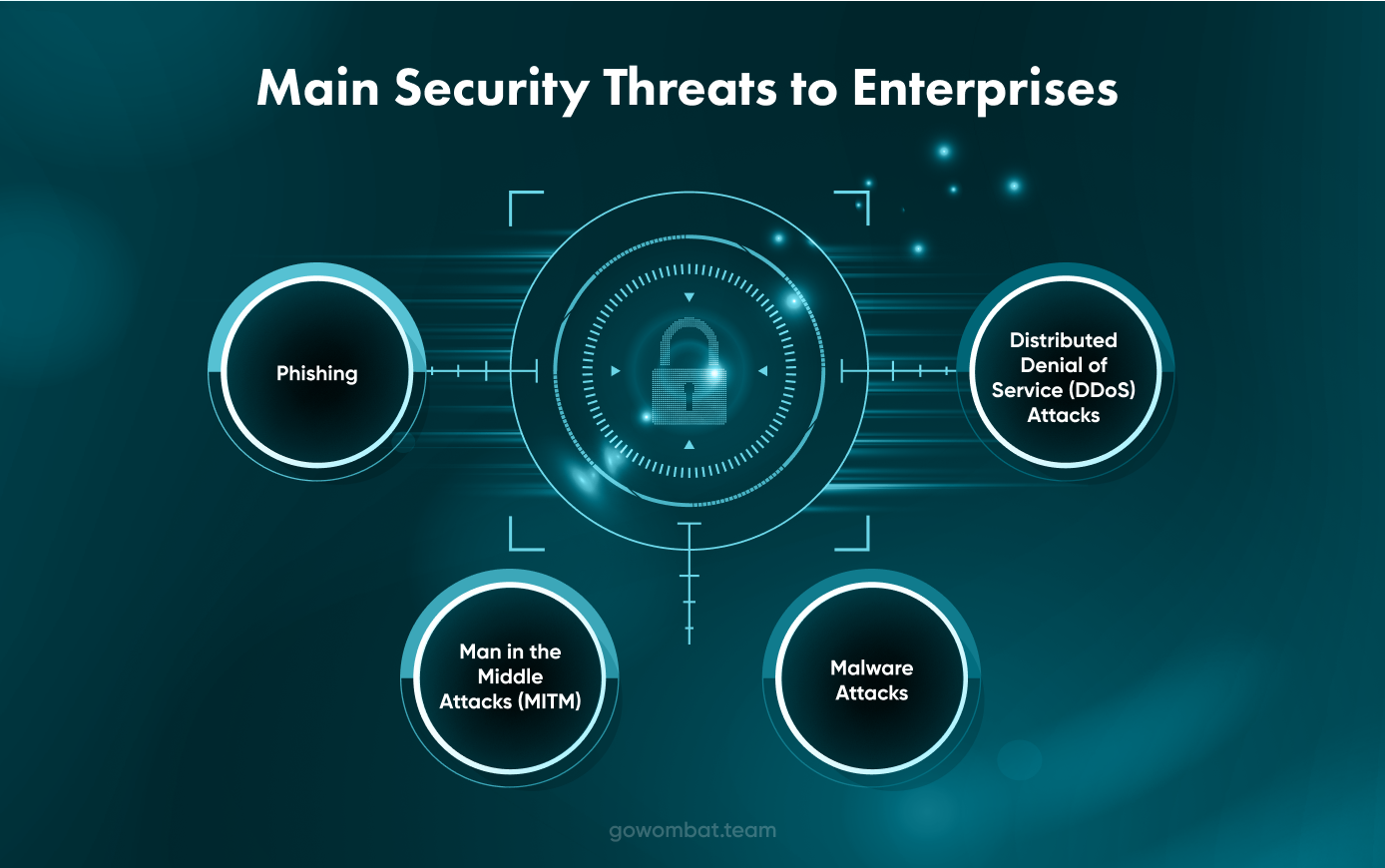
Major security incidents and regulatory actions consistently indicate that enterprise security failures are rarely the result of the lack of a single control. They arise when operational, technical, and personnel controls are not aligned, enforced, or governed as a system.
Governance and Monitoring Gaps in Large-Scale Data Breaches
The UK regulator's inquiry into the British Airways data breach revealed that the company's security weaknesses went beyond just the absence of technical protection. There was a security technology, but the insufficient operational oversight and delayed detection had allowed the unauthorised parties access. The incident has shown how gaps in monitoring processes, escalation procedures, and ownership can be a powerful combination to dismantle even the most mature technical environments.
Patch Management and Accountability Failure
Equifax's breach is still used to highlight the failure of operational and personnel controls. A vulnerability that had already been identified was not fixed, even though a patch was available. There were technical controls, but the operational processes did not ensure the quick implementation of the necessary measures, and the accountability for vulnerability management was not clearly defined. This blend of factors caused legal challenges and resulted in a reputational loss, which will take a long time to recover.
Third-Party Risk and Vendor Access Weaknesses
Supply chain vulnerabilities once again feature among the common patterns of incidents in enterprises. The breach at Target turned out to be initiated through a third-party vendor who had legitimate network access. Although internal systems were secured with technical measures, the lack of organisational processes and operational governance in terms of vendor access and monitoring went unaddressed. Personnel controls, such as access review and third-party accountability, were not uniformly adhered to, which allowed lateral movement within the environment.
Human Factors in Ransomware and Phishing Incidents
Recent ransomware attacks in healthcare, manufacturing, and logistics sectors have highlighted human behaviour as a determining factor in security outcomes. Several cases in Europe of phishing emails not only avoided the technical filtering of emails but also were complied with by employees unfamiliar with the reporting and response procedures. The lack of regular training, testing, and clearly defined response roles resulted in a delayed containment, and the operational and financial impact was higher.
Such cases demonstrate a consistent end for enterprise organisations. Just having advanced technology is not enough to guarantee resilience. Regulators, auditors, and customers are increasingly looking at whether operational discipline and personnel accountability go hand in hand with technical safeguards. The maturity of information security that lasts relies on how well all three pillars are able to work together effectively.
Conclusion
The three main aspects of information security, i.e. operational, technical, and personnel controls, serve as a pragmatic basis for enterprises to develop a strong ISMS and PIMS programme. This method, which is different from principle-based systems, integrates security with governance, accountability, and audit readiness.
Companies that harmonise these three aspects will be more capable of handling risks, complying with regulations, and maintaining security awareness over time in the evolving digital environments.
In case your company is reviewing or enhancing its information security, privacy management, or follows the ISO certification path, collaborating with a skilled Go Wombats information security consultant can be beneficial in turning the frameworks into efficient, auditable practices.
FAQs
How do regulators and auditors evaluate information security maturity?
Regulators and auditors check whether controls are consistently implemented, documented, and reviewed over time. They concentrate on governance, risk management, incident handling, and accountability through the evidence, rather than on individual security tools.
How long does it take to build a mature ISMS using the three-pillar model?
Establishing the first baseline of controls and evidence is a task that most organisations, on average, can accomplish within a few months, after which they can proceed with continuous enhancement cycles. Security maturity depends on the size of the organisation, the level of its regulatory exposure, and the degree to which security roles across various teams are embedded.
How do the three pillars of information security support SOC operations?
Operational controls establish the escalation and response workflows, technical controls deliver monitoring and telemetry capabilities, and personnel controls guarantee that analysts and responders behave consistently under stress. Without the synchronisation of all three pillars, the SOC cannot function effectively.
Why does third-party risk management depend on all three pillars of information security?
You can't solve vendor security issues just through contracts. Operational controls help in defining assessment and oversight, technical controls restrict access and exposure, while personnel controls make sure that vendors comply with the security measures agreed upon.
How does the three-pillar model evolve after ISO certification?
After certification, the focus is on continuous improvement. Controls get better, audits and incidents contribute to governance, and personnel roles change with systems, rules, and dangers.
Share and subscribe to our blog
Related articles

6 GDPR Compliance Principles You Need to Master
Organisations may face serious financial, legal, and reputational risk if they do not comprehend and implement GDPR compliance principles. GDPR requirements adherence is a board level concern rather than just legal, technical and organisat…

Cloud Data Security: Protecting Sensitive Data
Transferring corporate data to the cloud allows organisations to increase their flexibility, scalability, and cost efficiency. Cloud computing has become an essential part of modern corporate infrastructure, enabling remote work, real time…

Mobile App Security: How to Protect Data and Prevent Cyber Breaches
development marks a significant step for every organisation. By 2026, such applications extend beyond mere digital tools. Access to information systems, operational frameworks, and public perception now flows t…

The Importance of Cybersecurity
The concept of data leakage has become increasingly more commonplace and the need for protecting your computer is a definite consideration if you don’t want your personal information stolen. However, cybersecurity is not just limited to pe…

Cybersecurity Risk Management: What It Is and How to Use It
When you do your business online, there are always associated risks. We have already written a lot about the importance of cybersecurity, but there’s still plenty left to explore. You should understand what cybersecurity risk management st…
How to Achieve ISO 27001 Certification in 2026?
ISO 27001 certification follows a well defined procedure to demonstrate that your organisation adheres to globally recognised ISO (International Organisation for Standardisation) standards for information security. The certification involv…

How can we help you ?